Shared Pathway Bridge
Point Resolution Bridge
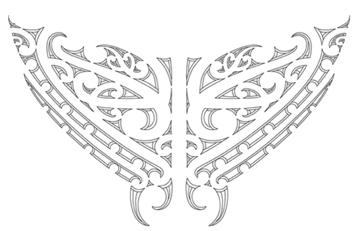
Warren & Mahoney were the architects and Henriata Nicholas was contracted as the iwi designer to integrate an engraved cultural pattern into the concrete beam as well as the glass balustrade.


The Chicago Athenaeum Museum of Architecture and Design
The council, recognising the importance of the location, both in terms of its prominence along the waterfront and its proximity to the historic salt water Parnell Baths wanted something sculptural, elegant and iconic. The baths, designed in the early 1950s in the International Modern style of lido bathing pools with a mosaic mural by artist James Turkington, with its fluid and abstracted swimmers, offered a clear language of angular lines meeting sinuous form and became a key motivator of the language and geometry of the design.
A simple but sculpted and hull-like concrete deck would extend from the headland and protrude out into the harbour. This would in turn be cradled by a highly expressive steel armature or exoskeleton which sinuously referenced the language of the baths beyond. A simple cantilevered glass balustrade, co-planar with the concrete deck would provide barrier protection.
The steel supporting the deck was designed to pay homage to the original bridge by echoing its three arches. The arches begin under the deck as diamond shaped columns which bifurcate to form the arches. The deck is formed with three separate twin-celled post tensioned precast concrete sections joined with in-situ stitches. The deck is supported by the steel armature through discrete pin connections.


To create the fluid and sinous forms, along with the geometric precision required the bridge was designed and modelled in Rhinoceros with the associated parametric plug-in Grasshopper. The parametric capability allowed for design iterations to be produced quickly and tested against architectural and structural requirements.