Pungarungaru Point Resolution Bridge
Auckland City Council media release: 15 September 2014
Tāmaki Makaurau | Cultural Integration & Pattern Design
This project was my second major cultural integration commission in Tāmaki Makaurau, Auckland. I was selected by Auckland Council’s Manager of Arts & Culture Programming, Hanna Scott, and worked in collaboration with architectural practice Warren and Mahoney.
The bridge is located along Tamaki Drive near the Parnell Baths, spanning roadway, rail, and tidal estuary along Auckland’s eastern waterfront. Positioned within a highly visible and historically significant landscape, the project offered an opportunity to embed Māori cultural narrative into contemporary urban infrastructure.
My design scope extended from the base of the main structure through to the glass balustrades. The pattern concept was grounded in the cultural significance of place—responding to historical community connections while engaging with modern materials. Drawing on Māori motif systems, the design focused on water as a central element. The Waitematā Harbour forms the gateway to this area, winding through inlets that were once more open and historically used as important kai gathering sites for local iwi.
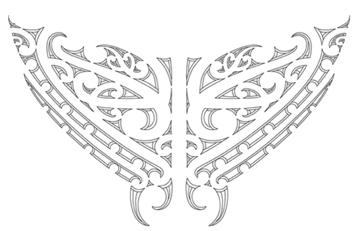
The resulting pattern, Pungarungaru, reflects the movement of water as it curves around surfaces. Fluid in form, the design features peaks and troughs that evoke rhythm and flow. At 80 metres in length, the bridge deck was constructed from precast sections assembled on site, requiring the pattern to be seamlessly repeatable. Using graphic concrete, the pattern was etched with a deeper cut at the base, graduating to a lighter surface toward the top. This visual language continued into the glass balustrades through ceramic frit printing.
Integrating Māori culture into urban structures allows cultural narratives to remain present, visible, and acknowledged—experienced daily by pedestrians crossing above and by vehicles and trains moving below. The bridge’s orientation toward Rangitoto further anchors the work, acknowledging my tūpuna and reinforcing ancestral presence within the contemporary landscape.
Awards
- NZIA Auckland Architecture Award, 2013
- International Federation of Landscape Architects Merit Award, 2013
- International Architecture Award, 2014 (Chicago Athenaeum: Museum of Architecture and Design)
- SCNZ Excellence in Steel Construction Award, 2015

Like whakairo, the pungarungaru patterns ingrained in the concrete, reflect the river and Waitematā.

The end of the bridge points towards Rangitoto.

Pungarungaru patterns are reflected on the glass balustrades and concrete base.